
What Role Do Butterfly Valves Play in Hydropower Plant Penstock Flow Regulation?
In a hydropower plant, water is the fuel. It is stored in a reservoir, channeled through a penstock, and directed to the turbine that generates electricity. The control of this water flow is critical to the efficiency and safety of the entire plant. If the flow is too high, the turbine can overspeed and be damaged. If the flow is too low, the plant operates inefficiently. If the flow must be stopped suddenly, the pressure surge can rupture the penstock. The Butterfly Valve is one of the key components that makes this control possible. It is a quarter-turn valve that regulates flow by rotating a disc within the pipe. In hydropower plants, Butterfly Valves are used in the penstock to isolate the turbine, to regulate flow during startup and shutdown, and to provide emergency shutoff. They are also used in cooling water systems, drainage systems, and other auxiliary circuits.
The role of the Butterfly Valve in penstock flow regulation is multifaceted. It must provide tight shutoff when closed, low resistance when open, and precise control when modulating. It must withstand the high pressures and large diameters typical of penstock applications. It must be reliable, because a failure can cause catastrophic damage. And it must be designed to handle the dynamic forces of the water, including the pressure surges that occur when the valve is closed quickly. This article will examine the role of the Butterfly Valve in hydropower plant penstock flow regulation. We will cover the design principles, the materials, the actuation methods, and the performance characteristics that make Butterfly Valves suitable for this demanding application. We will also provide detailed specifications for our Butterfly Valves from our factory at Dafugui Pipe Valve Co., Ltd.
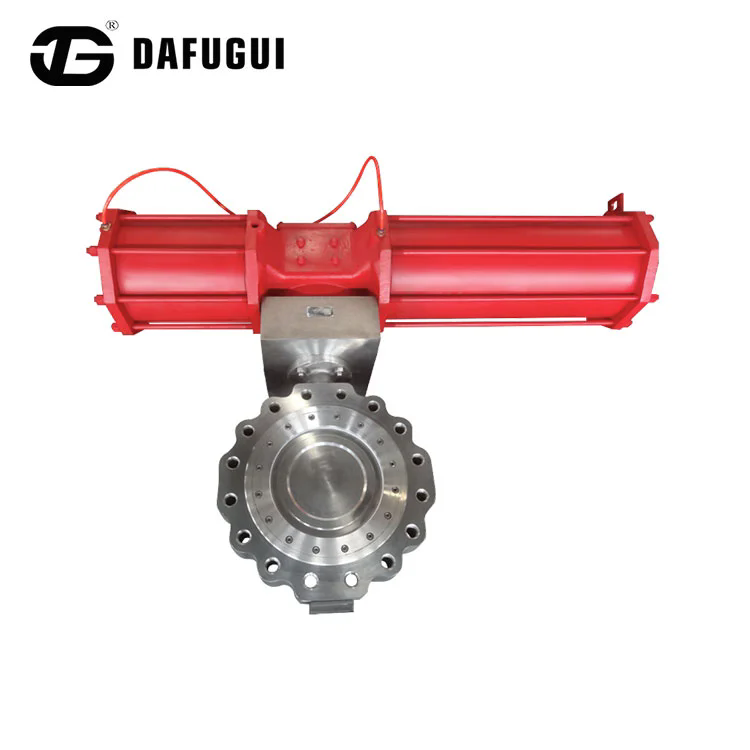
Table of Contents
- 1. What Is a Butterfly Valve and Where Does It Fit in a Hydropower Plant?
- 2. Why Are Butterfly Valves Preferred for Penstock Isolation?
- 3. How Does a Butterfly Valve Handle Pressure Surges and Water Hammer?
- 4. What Materials and Coatings Ensure Long Life in Penstock Service?
- 5. What Actuation Methods Are Used for Penstock Butterfly Valves?
- 6. What Specifications Define a Hydropower Butterfly Valve?
- 7. Frequently Asked Questions (FAQ)
- 8. Conclusion
1. What Is a Butterfly Valve and Where Does It Fit in a Hydropower Plant?
A Butterfly Valve is a quarter-turn valve that controls flow using a circular disc mounted on a rotating shaft. When the valve is closed, the disc is perpendicular to the flow, blocking it. When the valve is open, the disc is parallel to the flow, allowing water to pass with minimal resistance. The disc is typically mounted on a shaft that extends through the valve body to an actuator. The actuator rotates the shaft 90 degrees to open or close the valve. In a hydropower plant, Butterfly Valves are used in several locations. The most important is the penstock, where the valve isolates the turbine from the water source. This valve is often referred to as the "turbine inlet valve" or the "main inlet valve." It is typically large in diameter, ranging from 1 meter to 6 meters or more, and it must handle high pressures. Other Butterfly Valve applications in a hydropower plant include the cooling water system, the drainage system, and the fire protection system. The table below summarizes the typical Butterfly Valve applications in a hydropower plant.
| Application | Typical Diameter | Pressure Rating | Function |
| Penstock / Turbine Inlet | 1 - 6 m | PN10 - PN40 | Isolation, flow regulation, emergency shutoff |
| Cooling Water System | 100 - 600 mm | PN10 - PN16 | Flow control for cooling |
| Drainage System | 200 - 800 mm | PN10 - PN16 | Drainage control |
| Fire Protection System | 100 - 400 mm | PN16 | Isolation for fire suppression |
At Dafugui Pipe Valve Co., Ltd., our factory manufactures Butterfly Valves for hydropower applications in a range of sizes and pressure ratings. We have extensive experience in supplying valves for penstock and auxiliary systems. Our engineering team works closely with hydropower plant designers to ensure that the valve is optimized for the specific operating conditions.
2. Why Are Butterfly Valves Preferred for Penstock Isolation?
Butterfly Valves are preferred for penstock isolation for several reasons. The first is their compact design. A Butterfly Valve is much shorter in face-to-face dimension than a gate valve or a globe valve of the same diameter. This reduces the space required in the powerhouse and the cost of the valve. The second reason is their low pressure drop when fully open. The disc of a Butterfly Valve is the only obstruction in the flow path, and when it is parallel to the flow, the pressure drop is minimal. This is important for energy efficiency, as any pressure drop in the penstock represents lost energy. The third reason is their fast operation. A Butterfly Valve can be opened or closed in a matter of seconds, which is essential for emergency shutoff. The fourth reason is their ability to handle large diameters. Butterfly Valves are available in sizes up to 6 meters or more, making them suitable for the largest penstocks. The table below compares Butterfly Valves to other valve types used in penstock applications.
| Valve Type | Face-to-Face Length | Pressure Drop (Open) | Operating Speed | Max Size |
| Butterfly Valve | Short | Very Low | Fast | 6 m+ |
| Gate Valve | Long | Very Low | Slow | 3 m |
| Globe Valve | Long | High | Moderate | 1 m |
| Ball Valve | Moderate | Very Low | Fast | 2 m |
At our factory, we manufacture Butterfly Valves that are specifically designed for penstock isolation. Our valves feature a robust body, a precision-machined disc, and a reliable sealing system. We use high-quality materials and coatings to ensure long life in the demanding penstock environment. Our engineering team can assist with the selection of the right valve for your specific penstock conditions.
3. How Does a Butterfly Valve Handle Pressure Surges and Water Hammer?
Pressure surges, also known as water hammer, are one of the most significant challenges in penstock flow regulation. When a valve is closed quickly, the momentum of the water in the penstock is suddenly stopped, creating a pressure wave that travels back up the pipe. This pressure wave can be many times the normal operating pressure and can cause catastrophic damage to the penstock, the valve, and the turbine. Butterfly Valves are designed to handle pressure surges through a combination of slow closing and surge relief. The valve actuator is typically designed to close the valve slowly, over a period of 30 seconds to several minutes, to minimize the pressure surge. In addition, the valve may be equipped with a surge relief system, such as a bypass valve or an accumulator, that absorbs the pressure spike. The table below summarizes the methods used to handle pressure surges in penstock Butterfly Valves.
| Method | Description | Benefit |
| Slow Closing | Valve closes over 30 seconds to several minutes | Reduces pressure surge magnitude |
| Two-Stage Closing | Fast closing to a partial position, then slow closing | Balances speed and surge control |
| Bypass Valve | Small valve bypasses main valve to equalize pressure | Reduces surge before main valve opens |
| Surge Tank | External tank absorbs pressure wave | Protects penstock and valve |
| Accumulator | Hydraulic accumulator absorbs pressure spike | Protects actuator and valve |
At Dafugui Pipe Valve Co., Ltd., our Butterfly Valves are designed to handle the pressure surges typical of hydropower penstocks. We use heavy-duty actuators that can be programmed for slow closing and two-stage closing. We also offer bypass valves and surge relief systems as optional accessories. Our engineering team can analyze the surge conditions in your penstock and recommend the appropriate surge control measures.
4. What Materials and Coatings Ensure Long Life in Penstock Service?
The materials and coatings used in a Butterfly Valve for penstock service must be selected to withstand the specific conditions of the application. These conditions include the water quality (which may be fresh water, salt water, or water with abrasive particles), the operating pressure, and the temperature. The most common body materials for penstock Butterfly Valves are cast iron, ductile iron, carbon steel, and stainless steel. The disc is typically made from the same material as the body, or from a higher-grade material for improved corrosion resistance. The shaft is typically made from stainless steel. The sealing system is critical. The seat is typically made from a resilient material, such as EPDM or nitrile rubber, or from a metal for high-temperature or high-pressure applications. The table below summarizes the materials and coatings used in our penstock Butterfly Valves.
| Component | Material Options | Coating Options | Application |
| Body | Cast Iron, Ductile Iron, Carbon Steel, Stainless Steel | Epoxy, Polyurethane, Zinc-rich primer | Fresh water, salt water |
| Disc | Ductile Iron, Stainless Steel, Bronze | Nickel, Chrome, Epoxy | Corrosion and abrasion resistance |
| Shaft | Stainless Steel 416, 17-4 PH, Duplex | Chrome Plating | Strength and corrosion resistance |
| Seat | EPDM, Nitrile, Viton, PTFE, Metal | — | Sealing performance |
| Bearing | Bronze, PTFE-lined, Self-lubricating | — | Smooth operation |
At our factory, we select the materials and coatings for each Butterfly Valve based on the specific application. We use high-quality castings and precision machining to ensure that our valves meet the required dimensions and tolerances. We also offer a range of coatings to protect against corrosion and abrasion. Our goal is to provide Butterfly Valves that operate reliably for the life of the hydropower plant.
5. What Actuation Methods Are Used for Penstock Butterfly Valves?
The actuation of a penstock Butterfly Valve is a critical design consideration. The actuator must provide the torque required to rotate the disc against the water pressure and the friction of the seals. It must also provide the speed and control required for the specific operating mode. The most common actuation methods for penstock Butterfly Valves are electric, hydraulic, and pneumatic. Electric actuators use an electric motor and a gearbox to rotate the valve shaft. They are commonly used for modulating control and for applications where a slow, controlled closing is required. Hydraulic actuators use hydraulic pressure to move a piston or a vane, which rotates the valve shaft. They provide high torque and fast operation, making them suitable for emergency shutoff. Pneumatic actuators use compressed air to move a piston or a diaphragm. They are less common in penstock applications due to the high torque requirements. The table below compares the actuation methods.
| Actuation Method | Torque Capability | Speed | Control | Typical Application |
| Electric | Moderate to High | Moderate | Excellent (modulating) | Normal operation, flow regulation |
| Hydraulic | Very High | Fast | Good (on/off, emergency) | Emergency shutoff, large valves |
| Pneumatic | Low to Moderate | Fast | Moderate | Small valves, auxiliary systems |
| Manual (Gear) | Moderate | Slow | Manual | Backup, maintenance |
At Dafugui Pipe Valve Co., Ltd., our Butterfly Valves can be supplied with any of these actuation methods. We work with our customers to select the actuator that best suits their operating requirements. We also offer a range of control options, including manual override, position feedback, and remote control. Our goal is to provide a complete valve and actuator package that meets the specific needs of the hydropower plant.
6. What Specifications Define a Hydropower Butterfly Valve?
The key specifications for a hydropower Butterfly Valve include the size, the pressure rating, the body material, the disc material, the seat material, the actuation method, and the design standard. The table below provides a summary of the typical specifications for our penstock Butterfly Valves.
| Specification | Range | Notes |
| Size | DN100 - DN6000 | Larger sizes available on request |
| Pressure Rating | PN10 - PN40 | Higher ratings available |
| Body Material | Cast Iron, Ductile Iron, Carbon Steel, Stainless Steel | Selected based on water quality |
| Disc Material | Ductile Iron, Stainless Steel, Bronze | Selected based on corrosion and abrasion |
| Seat Material | EPDM, Nitrile, Viton, PTFE, Metal | Selected based on temperature and pressure |
| Actuation | Electric, Hydraulic, Pneumatic, Manual | Selected based on control requirements |
| Design Standard | API 609, AWWA C504, ISO 10631 | Compliance with international standards |
| Face-to-Face | API 609 Category A or B | Selected based on installation |
At our factory, we manufacture Butterfly Valves to meet these specifications and more. We can customize the valve to suit specific project requirements, including special sizes, special materials, and special actuation. Our engineering team can assist with the selection process and provide detailed technical data for your project.
7. Frequently Asked Questions (FAQ)
Question 1: What is the typical size of a Butterfly Valve used in a hydropower penstock?
Answer: The typical size of a Butterfly Valve used in a hydropower penstock ranges from 1 meter to 6 meters or more. The size is determined by the flow rate and the allowable pressure drop. Larger penstocks require larger valves. At Dafugui Pipe Valve Co., Ltd., we manufacture Butterfly Valves up to DN6000 and larger on request.
Question 2: How is a Butterfly Valve actuated in a hydropower plant?
Answer: Butterfly Valves in hydropower plants are typically actuated by electric or hydraulic actuators. Electric actuators are used for normal operation and flow regulation. Hydraulic actuators are used for emergency shutoff and for large valves that require high torque. The choice depends on the specific requirements of the plant.
Question 3: What is the difference between a resilient-seated and a metal-seated Butterfly Valve?
Answer: A resilient-seated Butterfly Valve uses a soft seat material, such as EPDM or nitrile rubber, which provides a tight seal at lower pressures and temperatures. A metal-seated Butterfly Valve uses a metal seat, which can withstand higher temperatures and pressures but may not provide as tight a seal. The choice depends on the operating conditions of the penstock.
Question 4: How do you prevent water hammer in a penstock Butterfly Valve?
Answer: Water hammer is prevented by closing the Butterfly Valve slowly, over a period of 30 seconds to several minutes. The actuator is programmed to provide a controlled closing profile. In addition, surge relief systems, such as bypass valves or surge tanks, can be used to absorb the pressure wave. Our engineering team can analyze the surge conditions in your penstock and recommend the appropriate measures.
Question 5: How often should a penstock Butterfly Valve be maintained?
Answer: A penstock Butterfly Valve should be inspected and maintained at regular intervals, typically annually or after a specified number of operating cycles. The maintenance should include checking the seat for wear, lubricating the bearings, testing the actuator, and verifying the sealing performance. Regular maintenance ensures reliable operation and extends the life of the valve.
8. Conclusion
Butterfly Valves play a critical role in hydropower plant penstock flow regulation. They provide isolation, flow control, and emergency shutoff. They are preferred for their compact design, low pressure drop, fast operation, and ability to handle large diameters. They are designed to withstand the high pressures and pressure surges of penstock service. And they are manufactured from materials and coatings that ensure long life in the demanding hydropower environment. At Dafugui Pipe Valve Co., Ltd., our factory has the expertise and the equipment to manufacture Butterfly Valves that meet the most demanding requirements of hydropower plants. We work closely with our customers to understand their specific needs and to provide the optimal valve solution. Whether you are building a new hydropower plant or upgrading an existing one, we can provide the Butterfly Valves you need.
Our commitment to quality and customer satisfaction has made us a trusted partner for hydropower projects around the world. We invite you to contact us to discuss your requirements. We can provide samples, technical data, and design assistance. Let us show you how our Butterfly Valves can improve the performance and reliability of your penstock flow regulation.
Contact Dafugui Pipe Valve Co., Ltd. today to discuss your hydropower Butterfly Valve requirements and discover how our valves can meet your penstock flow regulation needs.
Related News
- Why Do Desalination Plant High Salinity S32760 Threaded Pipe Flanges Excel in SWRO Brine and Chemical Lines?
- How Does a Butterfly Valve Control Water Flow in Municipal Supply Systems?
- What Is a Rubber Disc Check Valve and How Does It Ensure Reliable Backflow Prevention?
- Why Do Water Engineers Prefer Butterfly Valves for Pump Station Applications?
- How Does a Bellows Expansion Joint Protect Pipeline Systems from Thermal Expansion, Vibration, and Mechanical Stress?
- How Does Precision Socket‑weld Gate Valve Technology Enhance Safety in Corrosive Industrial Pipelines?
Leave me a message