
How Does a Bellows Expansion Joint Protect Pipeline Systems from Thermal Expansion, Vibration, and Mechanical Stress?
Pipelines in petrochemical, power, and metallurgy facilities constantly face thermal expansion, contraction, vibration, and mechanical deformation. Without proper compensation, these forces can cause leaks, fatigue cracks, and premature equipment failure. The Bellows Expansion Joint from Dafugui absorbs axial, lateral, angular, and combined displacements through the elastic deformation of stainless steel bellows. With a temperature range from -235°C to +450°C and pressure resistance up to 32MPa, this component delivers reliable performance in the most demanding industrial environments. This article examines its working principle, key advantages, main types, installation guidance, and the manufacturer's support that makes Dafugui a trusted supplier.
The Role of Expansion Joints in Industrial Pipeline Safety
Every industrial pipeline system undergoes dimensional changes due to temperature fluctuations, equipment vibration, and structural settling. If these movements are not accommodated, the resulting stress can transfer to anchors, nozzles, and connected equipment, leading to premature failure. A bellows expansion joint acts as a flexible element that absorbs these movements, protecting the entire system and extending its service life.
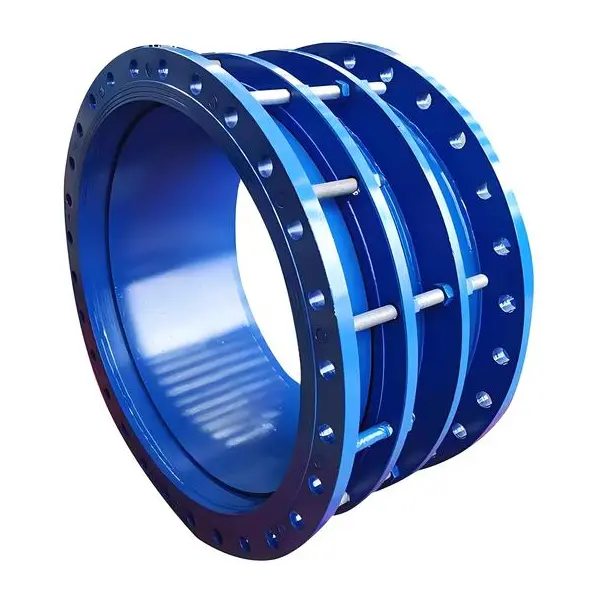
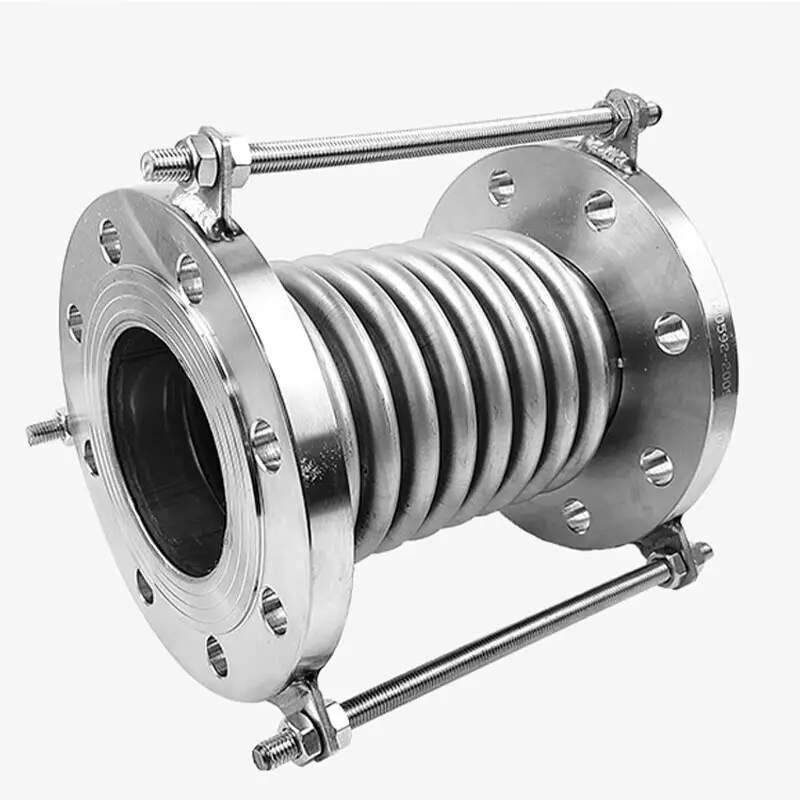
Dafugui, based in Wenzhou, Zhejiang, manufactures Bellows Expansion Joints that combine a corrugated stainless steel bellows with end pipes, flanges, and other accessories. The elastic deformation of the bellows converts pipeline displacement stress into controlled movement, reducing the load on fixed supports and preventing leakage at critical connections. This makes the expansion joint an essential component in refineries, power plants, chemical processing facilities, and metallurgical operations.
Working Principle and Functional Design
The core working principle of the bellows expansion joint is straightforward yet highly effective. When a pipeline expands or contracts due to temperature changes, the corrugated bellows compresses or extends accordingly, absorbing the displacement without transferring stress to the surrounding structure. The same mechanism absorbs lateral and angular movements caused by mechanical vibration or installation misalignment.
The bellows itself is the primary working element, fabricated from stainless steel for corrosion resistance and durability. End pipes and flanges provide the connection points, while internal sleeves guide the flow and protect the bellows from direct exposure to the medium. Connection methods include flanged and welded types, allowing the joint to be integrated into a wide range of pipeline configurations.
Beyond displacement compensation, the bellows expansion joint also provides pressure resistance, sealing, temperature resistance, impact resistance, vibration damping, and noise reduction, making it a multifunctional component in modern piping systems.
Key Advantages
The following table summarises the primary advantages of the Bellows Expansion Joint from Dafugui.
| Advantage | Description |
| Multi-directional Compensation | Simultaneously absorbs axial, lateral, angular and combined displacements, adapting to various pipeline layouts |
| Wide Temperature Range | Operating temperature from -235°C to +450°C, suitable for high and low temperature conditions |
| High Pressure Capacity | Maximum pressure resistance up to 32MPa |
| Corrosion Resistance | Stainless steel construction with excellent corrosion resistance and long service life |
| Vibration and Noise Reduction | Effectively absorbs equipment vibration and reduces pipeline system noise |
| Flexible Installation | Supports both flanged and welded connections, adapting to different pipeline systems |
Main Types and Selection Guidance
Bellows expansion joints are classified primarily by compensation mode. Understanding these types helps engineers select the right component for each application:
• Axial Type – Primarily absorbs axial displacement along the pipeline axis, commonly used in straight runs subject to thermal growth.
• Lateral Type – Primarily absorbs lateral displacement perpendicular to the pipeline axis, suitable for offset piping arrangements.
• Angular Type – Primarily absorbs angular displacement, often used in pairs to accommodate changes in direction.
• Pressure-balanced types – Designed to minimise the reaction forces generated by internal pressure, reducing the load on anchors and supports.
• Combined configurations – Custom-engineered to handle multiple displacement modes simultaneously.
Based on material, expansion joints are divided into metal and non-metal types. Dafugui provides type recommendations based on the specific displacement patterns, operating pressure, temperature, and medium of each pipeline system.
Installation Best Practices
Proper installation is critical to ensuring the expansion joint performs as designed and achieves its expected service life. The following guidelines should be observed:
• Pre-installation inspection – Verify the model, specifications, and pipeline configuration to confirm compliance with design requirements.
• Direction confirmation – For compensators with internal sleeves, ensure the sleeve direction aligns with the medium flow direction.
• No forced adjustment – Do not use the compensator's deformation to correct pipeline installation deviations, as this affects function and lifespan.
• Protect the bellows – Prevent welding spatter from contacting the bellows surface and avoid mechanical damage during installation.
• Remove positioning devices – Remove auxiliary positioning devices used for transport after pipeline installation is complete.
• Hydrostatic testing – Reinforce fixed pipe supports at pipeline ends where compensators are installed during pressure testing.
• Free movement – Ensure all moving components are not restricted by external structures.
Material Selection and Customisation
The choice of bellows material depends on the medium, temperature, and corrosion conditions. Common options include:
• Stainless Steel 304 – Suitable for general conditions with moderate corrosion resistance.
• Stainless Steel 316L – Offers better corrosion resistance for chemical and marine environments.
• Stainless Steel 321 – Provides improved high-temperature resistance for steam pipelines.
Dafugui also offers non-standard customisation, including special diameters, nickel-based alloys, and specific pressure and temperature requirements. Customers can provide operating parameters, and the technical team will develop a tailored solution. This flexibility ensures that the expansion joint matches the exact demands of each installation, whether in oil and gas, chemical processing, water management, or heavy industrial infrastructure.
Frequently Asked Questions
Q1: What is the difference between bellows expansion joints and sleeve expansion joints?
A: Bellows expansion joints absorb displacement through elastic deformation of the bellows, offering large compensation capacity, good sealing, and suitability for multi-directional displacement. Sleeve expansion joints absorb axial displacement through sleeve sliding, with a simpler structure but requiring regular maintenance. Bellows types are more widely used in general conditions.
Q2: How do I select the right bellows material for my application?
A: The selection depends on the medium and temperature. SS304 suits general conditions; SS316L offers better corrosion resistance for chemical and marine environments; SS321 provides improved high-temperature performance for steam lines. Dafugui can recommend the appropriate grade based on your operating parameters.
Q3: Does the bellows expansion joint require regular maintenance?
A: Yes. Periodic inspection is recommended to check the bellows surface for cracks, corrosion, or mechanical damage; to verify flange bolts for tightness; and to confirm limit devices are correctly positioned. If significant deformation or damage is found, the unit should be replaced promptly.
Q4: Does Dafugui support customised expansion joints?
A: Yes. Non-standard customisation is available, including non-standard diameters, special materials, and specific pressure and temperature requirements. Please provide operating parameters for a tailored solution.
Q5: What are the standard lead times and payment terms?
A: Standard lead time is 15 to 30 days for standard items and 35 to 45 days for customised production. Payment terms include T/T and L/C at sight, with trade terms of EXW, FOB, and CIF (Incoterms 2020).
Q6: Are free samples available?
A: Yes, free standard samples are offered for standard sizes and common materials such as SS304 and SS316/316L. Sample fees apply for large sizes or special alloys. Standard spare parts are provided based on client requirements.
Conclusion
The Bellows Expansion Joint from Dafugui delivers reliable compensation for thermal expansion, vibration, and mechanical deformation in demanding pipeline systems. With multi-directional displacement absorption, a wide temperature range, high pressure capacity, and flexible connection options, it protects equipment and extends service life across petrochemical, power, and metallurgy applications. Backed by over 15 years of manufacturing experience, customisation capabilities, and comprehensive quality documentation, Dafugui provides a dependable solution for engineers and procurement teams. To discuss your pipeline requirements or request a technical recommendation, contact the Dafugui team today – we are ready to support your project from selection to delivery.
Related News
- What Is a Rubber Disc Check Valve and How Does It Ensure Reliable Backflow Prevention?
- Why Do Water Engineers Prefer Butterfly Valves for Pump Station Applications?
- How Does Precision Socket‑weld Gate Valve Technology Enhance Safety in Corrosive Industrial Pipelines?
- What Makes Gate Valves Durable Enough for High-Temperature Steam Applications?
- Why the Socket‑weld Gate Valve Is the Preferred Choice for High‑Pressure, Corrosive Pipeline Systems?
- Why Is the Socket-weld Gate Valve a Reliable Choice for High-Pressure Industrial Piping Systems?
Leave me a message