
How Does a Butterfly Valve Control Water Flow in Municipal Supply Systems?
In a municipal water supply system, a single valve can control the flow of millions of liters of water per day. It can isolate a section of main for repair, regulate pressure in a distribution zone, or throttle flow to match demand. The Butterfly Valve is one of the most common choices for these critical functions. It is compact, lightweight, and cost-effective compared to gate valves or globe valves of the same diameter. It operates with a quarter-turn, making it fast to open and close. And it can be automated with actuators for remote control. But not all butterfly valves are suitable for municipal water supply. The wrong valve can corrode, leak, or fail to operate when needed. For procurement managers at water utilities, municipalities, and engineering contractors, selecting the right Butterfly Valve is a decision that affects the reliability and safety of the entire water supply system.
This guide is written for buyers who need to source Butterfly Valves for municipal water supply applications. We will explain how a butterfly valve controls water flow, the key design features that determine performance, the specifications to include in a purchase order, and the criteria for evaluating a supplier. We will also provide detailed product parameters from our factory at Dafugui Pipe Valve Co., Ltd. Whether you are equipping a new water treatment plant, replacing valves in an aging distribution network, or specifying valves for a fire protection system, this guide will help you make an informed decision.
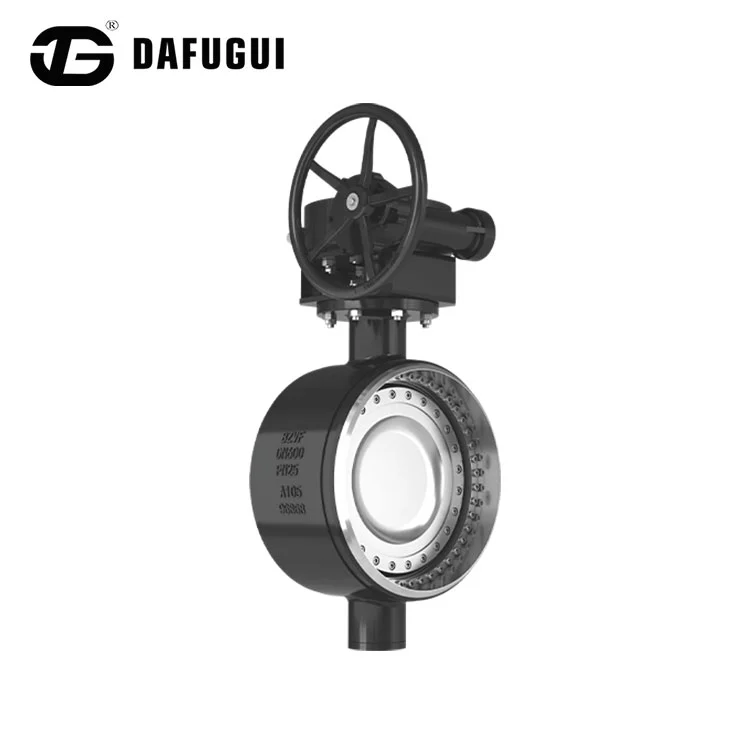
Table of Contents
- 1. How Does a Butterfly Valve Control Water Flow?
- 2. What Design Features Determine Performance in Water Supply?
- 3. What Materials Are Suitable for Municipal Water?
- 4. What Specifications Should Buyers Include in a Purchase Order?
- 5. How Do You Evaluate a Butterfly Valve Supplier?
- 6. What Are the Key Product Parameters from Our Factory?
- 7. Frequently Asked Questions (FAQ)
- 8. Conclusion
1. How Does a Butterfly Valve Control Water Flow?
A Butterfly Valve controls water flow by rotating a circular disc within the pipe. The disc is mounted on a shaft that is connected to a handle or actuator. When the handle is turned 90 degrees, the disc rotates from a position perpendicular to the flow (closed) to a position parallel to the flow (open). In the open position, the disc is aligned with the flow, offering minimal resistance. In the closed position, the disc presses against a seat, creating a seal that stops the flow. The valve can also be positioned at intermediate angles to throttle the flow. The relationship between the disc angle and the flow rate is not linear; it follows a characteristic curve that depends on the valve design. The table below shows the typical flow characteristics of a butterfly valve at different disc angles.
| Disc Angle (Degrees) | Flow Rate (% of Maximum) | Pressure Drop | Typical Application |
| 0 (Closed) | 0% | Maximum | Isolation |
| 30 | 20% | High | Throttling |
| 60 | 60% | Moderate | Flow control |
| 90 (Open) | 100% | Low | Full flow |
The ability of a Butterfly Valve to control flow precisely depends on the actuator and the control system. A manual handle provides simple on/off control. A gear operator allows for more precise manual positioning. A pneumatic or electric actuator, combined with a positioner, allows for automatic modulation of the flow rate based on a control signal. This is essential for applications such as pressure control or flow balancing in a distribution network. At Dafugui Pipe Valve Co., Ltd., our factory manufactures Butterfly Valves with a range of actuation options to suit different control requirements.
2. What Design Features Determine Performance in Water Supply?
The performance of a Butterfly Valve in a municipal water supply system is determined by several design features. The most important are the seat design, the disc design, the shaft design, and the body design. The seat is the component that creates the seal. It can be a resilient seat (made from rubber or PTFE) or a metal seat. Resilient seats provide a bubble-tight seal at lower pressures and are suitable for most water supply applications. Metal seats are used for high-temperature or high-pressure applications. The disc design affects the flow characteristics and the pressure drop. A standard disc is a simple flat plate. A streamlined disc reduces turbulence and pressure drop. The shaft design determines the torque required to operate the valve and the strength of the valve. A through-shaft design provides greater strength but may obstruct the flow. A stub-shaft design reduces obstruction but may be less robust. The body design determines the valve's pressure rating and its compatibility with different pipe connections. The table below summarizes these design features.
| Design Feature | Options | Impact on Performance | Typical Application |
| Seat Design | Resilient (EPDM, NBR, PTFE), Metal | Resilient: bubble-tight seal; Metal: high temperature | Water supply: resilient |
| Disc Design | Standard, Streamlined | Streamlined: lower pressure drop | Water supply: streamlined |
| Shaft Design | Through-Shaft, Stub-Shaft | Through: stronger; Stub: less obstruction | Water supply: through-shaft |
| Body Design | Wafer, Lug, Flanged, Grooved | Wafer: compact; Lug: removable; Flanged: strong | Water supply: lug or flanged |
| Actuation | Handle, Gear, Pneumatic, Electric | Manual: simple; Actuated: automatic control | Water supply: gear or actuated |
At our factory, we design our Butterfly Valves for municipal water supply with a focus on durability, reliability, and ease of maintenance. We use resilient seats made from high-quality EPDM or NBR, which are resistant to water, chlorine, and other chemicals used in water treatment. We use streamlined discs to minimize pressure drop. We use through-shaft designs for strength and stability. And we offer a range of body configurations to suit different pipe connections.
3. What Materials Are Suitable for Municipal Water?
The materials used in a Butterfly Valve for municipal water supply must be resistant to corrosion, safe for potable water, and durable enough to withstand decades of service. The most common materials for the body are cast iron, ductile iron, and stainless steel. Cast iron is economical but can corrode over time. Ductile iron is stronger and more corrosion-resistant. Stainless steel is the most corrosion-resistant but also the most expensive. The disc is typically made from ductile iron, stainless steel, or aluminum bronze. The seat is typically made from EPDM, NBR, or PTFE. The shaft is typically made from stainless steel. The table below summarizes the materials and their suitability for municipal water.
| Component | Material Options | Corrosion Resistance | Potable Water Suitability |
| Body | Cast Iron, Ductile Iron, Stainless Steel | Ductile iron: good; Stainless: excellent | All suitable with proper coating |
| Disc | Ductile Iron, Stainless Steel, Aluminum Bronze | Stainless: excellent; Bronze: good | All suitable |
| Seat | EPDM, NBR, PTFE | EPDM: excellent; PTFE: excellent | All suitable (NSF/61 certified) |
| Shaft | Stainless Steel (304, 316, 17-4PH) | Excellent | Suitable |
| Coating | Epoxy, Fusion Bonded Epoxy (FBE) | Excellent | NSF/61 certified coatings available |
At Dafugui Pipe Valve Co., Ltd., our factory uses high-quality materials for our Butterfly Valves. We offer ductile iron bodies with fusion bonded epoxy coating, stainless steel discs and shafts, and EPDM seats. All materials are certified for potable water contact and meet the requirements of NSF/ANSI 61 and WRAS. Our valves are designed for a service life of 50 years or more.
4. What Specifications Should Buyers Include in a Purchase Order?
When purchasing Butterfly Valves for municipal water supply, the buyer should include detailed specifications in the purchase order to ensure that the product meets the required performance and quality standards. The key specifications are the size, the pressure rating, the body material, the disc material, the seat material, the shaft material, the end connection, the actuation type, and the coating. The size should be specified in millimeters or inches. The pressure rating should be specified in PN or Class. The materials should be specified by type and grade. The end connection should be specified by type (wafer, lug, flanged). The actuation type should be specified (handle, gear, pneumatic, electric). The coating should be specified by type and thickness. The table below summarizes the specifications that should be included in a purchase order.
| Specification | Unit of Measure | Example |
| Size | mm or inches | DN100 (4") |
| Pressure Rating | PN or Class | PN16 |
| Body Material | Type and grade | Ductile Iron GGG40 |
| Disc Material | Type and grade | Stainless Steel 316 |
| Seat Material | Type | EPDM |
| Shaft Material | Type and grade | Stainless Steel 17-4PH |
| End Connection | Type | Lug |
| Actuation | Type | Gear Operator |
| Coating | Type and thickness | FBE, 250 µm |
| Standard | Reference | API 609, ISO 5752 |
At our factory, we work with our customers to ensure that all specifications are clearly defined and understood before production begins. We provide samples for approval and maintain strict quality control throughout the production process. Our goal is to deliver Butterfly Valves that meet or exceed our customers' expectations.
5. How Do You Evaluate a Butterfly Valve Supplier?
Evaluating a supplier of Butterfly Valves is critical for ensuring a reliable supply of high-quality products. The key criteria for evaluating a supplier are manufacturing capability, quality management, material sourcing, production capacity, delivery performance, and technical support. Manufacturing capability includes the ability to cast, machine, assemble, and test valves to the required specifications. Quality management includes the systems and processes that ensure consistent quality. Material sourcing includes the ability to source high-quality raw materials at competitive prices. Production capacity includes the ability to meet large orders in a timely manner. Delivery performance includes the ability to meet lead times and to respond to urgent orders. Technical support includes the ability to assist with specification, design, and problem-solving. The table below summarizes these criteria and what to look for in each.
| Evaluation Criterion | What to Look For | Why It Matters |
| Manufacturing Capability | Foundry, machining centers, assembly lines, test rigs | Ensures product quality and consistency |
| Quality Management | ISO 9001 certification, inspection records | Ensures consistent product quality |
| Material Sourcing | Reliable suppliers, quality raw materials | Ensures product performance and durability |
| Production Capacity | Monthly output, ability to scale | Ensures timely delivery of large orders |
| Delivery Performance | On-time delivery record, inventory capability | Keeps your project on schedule |
| Technical Support | Engineering team, design assistance | Helps you select the right product |
At Dafugui Pipe Valve Co., Ltd., our factory has been producing Butterfly Valves for over a decade. We have a strong track record of quality, delivery, and customer satisfaction. We are ISO 9001 certified, and we maintain detailed records of all inspections. Our production capacity is among the largest in the region, and we can scale to meet large orders. Our technical team is knowledgeable and responsive, and we are committed to helping our customers succeed. We invite you to evaluate us against these criteria and to consider us as your partner for Butterfly Valves.
6. What Are the Key Product Parameters from Our Factory?
The following table provides the key product parameters for our Butterfly Valves for municipal water supply. These valves are designed for a wide range of applications, including water treatment plants, distribution networks, and fire protection systems. Our factory can also produce custom valves to meet specific requirements.
| Parameter | Specification Range | Notes |
| Size | DN50 - DN1200 (2" - 48") | Custom sizes available |
| Pressure Rating | PN10, PN16, PN25 | Class 150, 300 available |
| Body Material | Ductile Iron GGG40, Stainless Steel | Cast iron available for non-critical |
| Disc Material | Ductile Iron, Stainless Steel 316, Aluminum Bronze | Nylon coated available |
| Seat Material | EPDM, NBR, PTFE | NSF/61 certified |
| Shaft Material | Stainless Steel 416, 304, 316, 17-4PH | Selected for torque and corrosion |
| End Connection | Wafer, Lug, Flanged, Grooved | Selected based on piping |
| Actuation | Handle, Gear, Pneumatic, Electric | Actuators available with positioners |
| Coating | Fusion Bonded Epoxy (FBE) | 250 µm thickness, NSF/61 certified |
| Operating Temperature | -10°C to +80°C (EPDM) | Higher with PTFE or metal seats |
| Standards | API 609, ISO 5752, EN 593 | Compliance with international standards |
| MOQ | 50 pieces | Negotiable for large orders |
At our factory, we manufacture our Butterfly Valves to meet these specifications and more. We can customize the size, materials, actuation, and coating to suit your specific requirements. Our quality control system includes inspection of raw materials, in-process inspection, and final inspection before shipment. Our goal is to provide our customers with high-quality Butterfly Valves that ensure the reliability and safety of their water supply systems.
7. Frequently Asked Questions (FAQ)
Question 1: What is the difference between a wafer and a lug butterfly valve?
Answer: A wafer Butterfly Valve is designed to be clamped between two pipe flanges. It is compact and lightweight but cannot be used for dead-end service. A lug Butterfly Valve has threaded inserts in the body that allow it to be bolted to a single flange. This allows the valve to be used for dead-end service and to be removed from the line without disturbing the downstream piping. For municipal water supply, lug valves are often preferred for their flexibility.
Question 2: What is the typical service life of a butterfly valve in municipal water supply?
Answer: A high-quality Butterfly Valve with a ductile iron body, stainless steel disc and shaft, and EPDM seat can have a service life of 50 years or more in municipal water supply. The actual service life depends on the water quality, the operating conditions, and the maintenance program. Regular inspection and exercise of the valve can extend its life.
Question 3: Can butterfly valves be used for flow control, or only for isolation?
Answer: Butterfly Valves can be used for both isolation and flow control. However, for precise flow control, a valve with a streamlined disc and a modulating actuator is recommended. Standard butterfly valves are often used for throttling, but the flow characteristic is not linear, and the valve may experience cavitation or noise at certain positions. For critical flow control applications, a globe valve or a specialized control valve may be more suitable.
Question 4: How do I select the correct actuator for my butterfly valve?
Answer: The selection of the actuator depends on the required torque, the available power supply, and the control requirements. The torque required to operate the valve depends on the valve size, the pressure differential, and the seat material. Pneumatic actuators are common for on/off and modulating control in water supply. Electric actuators are used where compressed air is not available. Manual gear operators are used for isolation valves that are not frequently operated. Our engineering team can help you select the correct actuator for your application.
Question 5: What is the difference between EPDM and NBR seats?
Answer: EPDM (ethylene propylene diene monomer) and NBR (nitrile butadiene rubber) are both synthetic rubbers used for valve seats. EPDM has excellent resistance to water, steam, and ozone, making it ideal for municipal water supply. NBR has excellent resistance to oils and fuels but is less resistant to ozone and weathering. For water supply applications, EPDM is generally preferred.
8. Conclusion
Butterfly Valves are essential for controlling water flow in municipal supply systems. They provide reliable isolation, efficient flow control, and long service life when selected and applied correctly. For procurement managers at water utilities and engineering contractors, the key to success is understanding the design features that determine performance, specifying the right materials and dimensions, and selecting a supplier with the capability and quality systems to deliver consistent products. At Dafugui Pipe Valve Co., Ltd., our factory has the expertise and the equipment to manufacture high-quality Butterfly Valves for the most demanding municipal water supply applications. We use high-quality materials, precision manufacturing, and rigorous quality control to ensure that our valves meet the highest standards of performance and reliability.
Whether you are equipping a new water treatment plant, replacing valves in a distribution network, or specifying valves for a fire protection system, we invite you to contact us to discuss your requirements. We can provide samples, technical data, and customized solutions. Our commitment to quality and customer satisfaction has made us a trusted partner for water utilities and municipalities around the world.
Contact Dafugui Pipe Valve Co., Ltd. today to discuss your Butterfly Valve requirements and discover how our products can improve the reliability and efficiency of your municipal water supply system.
Related News
- Why Do Desalination Plant High Salinity S32760 Threaded Pipe Flanges Excel in SWRO Brine and Chemical Lines?
- What Role Do Butterfly Valves Play in Hydropower Plant Penstock Flow Regulation?
- What Is a Rubber Disc Check Valve and How Does It Ensure Reliable Backflow Prevention?
- Why Do Water Engineers Prefer Butterfly Valves for Pump Station Applications?
- How Does a Bellows Expansion Joint Protect Pipeline Systems from Thermal Expansion, Vibration, and Mechanical Stress?
- How Does Precision Socket‑weld Gate Valve Technology Enhance Safety in Corrosive Industrial Pipelines?
Leave me a message