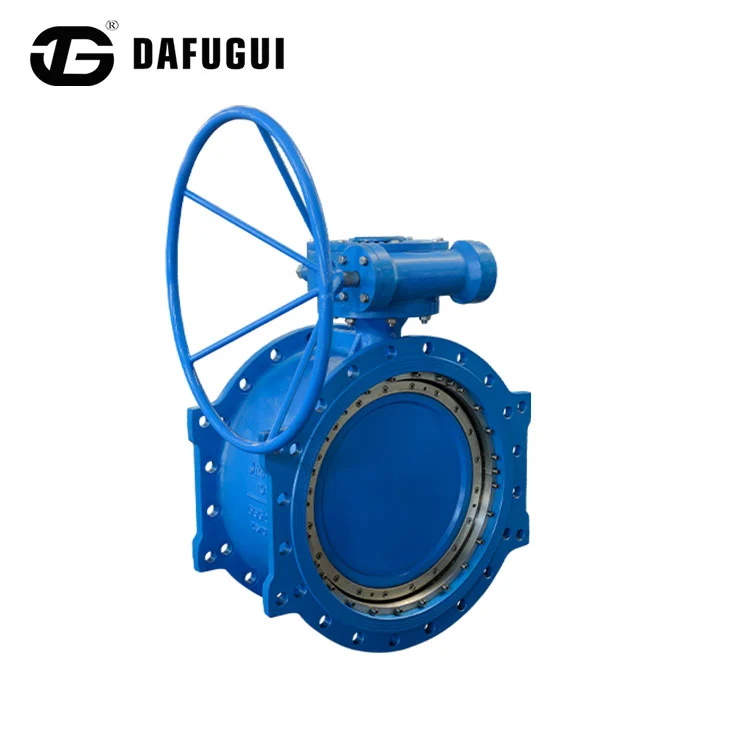

What Role Do Butterfly Valves Play in Protecting Pumps from Surge Pressure Events?
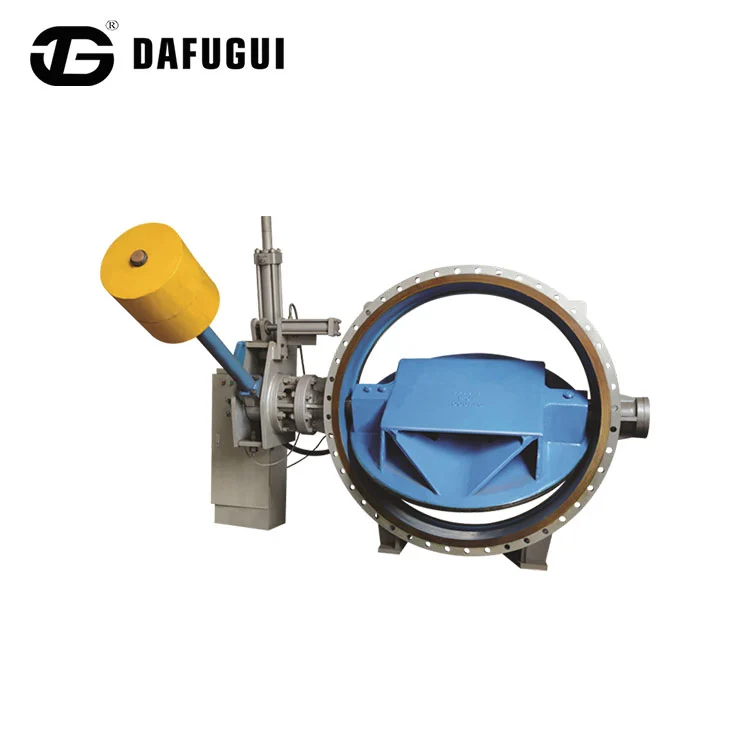
A pump station on a municipal water line shuts down unexpectedly when the power grid trips. The check valve slams shut, and a pressure wave travels back through the discharge line at the speed of sound in water. Within seconds, the pressure at the pump discharge can spike to three or four times the normal operating pressure. If the system is not protected, the surge can crack the pump casing, rupture the pipe, or destroy the check valve. The Butterfly Valve at the pump discharge plays a critical role in this scenario. When specified and actuated correctly, it can close slowly enough to prevent the pressure wave from forming, or it can be positioned to absorb the surge before it reaches the pump. When specified incorrectly, it can make the surge worse. For procurement managers and pump station engineers, understanding the butterfly valve's role in surge protection is essential for selecting a valve that protects the pump rather than endangering it.
This guide is written for buyers who need to evaluate Butterfly Valves for pump discharge applications where surge pressure is a concern. We will explain how surge pressure events occur, the specific mechanisms by which a butterfly valve can mitigate or exacerbate the surge, the closure timing and actuator requirements, the role of valve design in surge absorption, and the criteria for evaluating a supplier. We will also provide detailed product parameters from our factory at Dafugui Pipe Valve Co., Ltd. Whether you are designing a new pump station, upgrading an existing one, or sourcing replacement valves, this guide will help you select a Butterfly Valve that contributes to pump protection rather than compromising it.
Table of Contents
- 1. What Is Surge Pressure and How Does It Threaten Pumps?
- 2. How Does a Butterfly Valve Mitigate Surge Pressure?
- 3. Why Does Closure Timing Determine Whether the Valve Protects or Endangers the Pump?
- 4. What Actuator Options Support Surge-Protective Closure?
- 5. How Does Valve Design Affect Surge Absorption?
- 6. How Do You Evaluate a Butterfly Valve Supplier for Surge Protection?
- 7. What Are the Key Product Parameters from Our Factory?
- 8. Frequently Asked Questions (FAQ)
- 9. Conclusion
1. What Is Surge Pressure and How Does It Threaten Pumps?
Surge pressure, also known as water hammer, is a pressure transient that occurs when the flow of water in a piping system is suddenly stopped or changed. The most common cause is a pump trip, where the pump stops and the check valve closes, stopping the flow. The kinetic energy of the moving water column is converted into pressure energy, creating a pressure wave that travels back through the system. The magnitude of the surge depends on the flow velocity, the speed of sound in the water, the pipe material, and the closure time of the valve. In a typical pump station, the surge pressure can reach 200% to 400% of the normal operating pressure. This can be enough to rupture pipes, damage pump casings, and destroy valves. The table below summarizes the factors that affect surge pressure magnitude.
| Factor | Effect on Surge Pressure | Typical Value |
| Flow Velocity | Higher velocity increases surge | 1.5 - 3.0 m/s |
| Speed of Sound in Water | Higher speed increases surge | 1,200 - 1,500 m/s |
| Pipe Material | Rigid pipes increase surge | Steel, ductile iron, PVC |
| Valve Closure Time | Faster closure increases surge | 1 - 30 seconds |
| Check Valve Type | Fast-closing check valves increase surge | Lift check, swing check, butterfly |
At Dafugui Pipe Valve Co., Ltd., our factory manufactures Butterfly Valves that are used in pump discharge applications where surge pressure is a concern. We understand that the valve is not just a flow control device; it is part of the surge protection strategy. Our engineering team works with pump station designers to specify the right valve and actuator combination for the specific surge conditions.
2. How Does a Butterfly Valve Mitigate Surge Pressure?
A Butterfly Valve mitigates surge pressure through two mechanisms: controlled closure and flow modulation. Controlled closure is the most important. If the butterfly valve is closed slowly, the flow velocity decreases gradually, and the kinetic energy of the water column is dissipated over a longer time. This reduces the magnitude of the pressure wave. The key parameter is the critical closure time, which is the time required for the pressure wave to travel from the valve to the reservoir and back. If the valve closes faster than this time, the full surge pressure is generated. If it closes slower, the surge is reduced. The table below shows the relationship between closure time and surge pressure reduction.
| Closure Time (seconds) | Surge Pressure (% of normal) | Protection Level |
| 1 - 2 | 300% - 400% | Poor (high surge) |
| 3 - 5 | 200% - 300% | Moderate |
| 6 - 10 | 150% - 200% | Good |
| 11 - 20 | 120% - 150% | Very good |
| > 20 | < 120% | Excellent |
At our factory, we manufacture Butterfly Valves with actuation options that support controlled closure. We offer electric actuators with adjustable closing times, pneumatic actuators with flow control valves, and hydraulic actuators with programmable closure profiles. Our goal is to provide our customers with a valve that can be tuned to the specific surge conditions of their pump station.
3. Why Does Closure Timing Determine Whether the Valve Protects or Endangers the Pump?
Closure timing is the single most important factor in determining whether a Butterfly Valve protects the pump or makes the surge worse. A butterfly valve that closes too quickly can generate a surge that is even higher than the surge generated by the check valve alone. This is because the butterfly valve is often larger and has a different flow characteristic than the check valve. If the butterfly valve closes in 1 second, it can create a pressure spike that travels back to the pump before the check valve has fully closed. The pump then experiences the combined effect of both closures. On the other hand, if the butterfly valve closes too slowly, it may not provide adequate isolation in an emergency. The optimal closure time is determined by a surge analysis that considers the pump characteristics, the piping layout, and the check valve behavior. The table below summarizes the consequences of incorrect closure timing.
| Closure Timing | Effect on Surge | Effect on Pump Protection |
| Too Fast (< 2 seconds) | Generates high surge, can exceed check valve surge | Endangers pump, may cause casing damage |
| Optimal (5-15 seconds) | Reduces surge, allows check valve to close first | Protects pump, reduces pressure spike |
| Too Slow (> 20 seconds) | Low surge, but delayed isolation | May not protect pump in emergency |
At Dafugui Pipe Valve Co., Ltd., we work with our customers to determine the optimal closure time for their specific pump station. We provide actuators with adjustable closure times and can recommend settings based on a surge analysis. Our engineering team can assist with the analysis or review the customer's analysis to ensure that the valve timing is correct.
4. What Actuator Options Support Surge-Protective Closure?
The actuator is the component that controls the closure of the Butterfly Valve. The actuator type determines the available closure profiles and the reliability of the closure. The most common actuator types for surge-protective applications are electric actuators, pneumatic actuators, and hydraulic actuators. Electric actuators offer precise control of closure time and can be programmed with a two-stage closure profile: fast for the first 80% of travel, slow for the final 20%. This profile minimizes surge while still providing rapid isolation. Pneumatic actuators are fast and reliable, but they require a flow control valve to adjust the closure speed. Hydraulic actuators offer the highest torque and can be programmed with complex closure profiles. The table below compares these actuator types.
| Actuator Type | Closure Control | Closure Speed | Typical Application |
| Electric | Adjustable, programmable | 5 - 60 seconds | Pump stations with surge analysis |
| Pneumatic | Flow control valve | 2 - 20 seconds | Fast isolation, moderate surge |
| Hydraulic | Programmable profile | 2 - 30 seconds | High-torque applications, complex profiles |
| Manual (Gear) | Operator-dependent | 10 - 60 seconds | Low-risk applications, backup |
At our factory, we supply Butterfly Valves with all four actuator types. We can help our customers select the actuator that provides the closure profile required by their surge analysis. We also provide actuators with battery backup or manual override for emergency closure. Our goal is to ensure that the valve can be closed reliably and at the correct speed for the application.
5. How Does Valve Design Affect Surge Absorption?
The design of the Butterfly Valve itself affects its surge absorption characteristics. The disc shape, the seat design, and the flow characteristic all influence how the valve behaves during closure. A valve with a streamlined disc and a low-profile seat creates less turbulence during closure, which reduces the secondary pressure fluctuations. A valve with a high-profile seat or a complex disc shape can create flow separation and vortex shedding, which can amplify the surge. The table below summarizes the design features that affect surge absorption.
| Design Feature | Effect on Surge | Recommendation |
| Disc Shape | Streamlined disc reduces turbulence | Select low-profile disc for surge protection |
| Seat Design | Low-profile seat reduces flow disturbance | Select resilient seat for tight closure |
| Flow Characteristic | Equal percentage reduces surge at low flow | Select equal percentage characteristic |
| Body Design | Streamlined body reduces pressure loss | Select full-bore body design |
At Dafugui Pipe Valve Co., Ltd., our factory designs our Butterfly Valves with surge protection in mind. We use streamlined discs and low-profile seats to minimize turbulence during closure. We also offer valves with equal percentage flow characteristics for applications that require precise flow modulation. Our goal is to provide our customers with a valve that not only isolates the pump but also contributes to the surge protection of the system.
6. How Do You Evaluate a Butterfly Valve Supplier for Surge Protection?
Evaluating a supplier of Butterfly Valves for surge protection requires a focus on valve design, actuator capability, testing, and technical support. The supplier must offer valves with the design features that support surge absorption, and actuators that provide the required closure profiles. They must have the capability to test the valves and actuators under simulated surge conditions. And they must provide technical support to help the buyer perform the surge analysis and select the right valve and actuator combination. The table below summarizes the evaluation criteria.
| Evaluation Criterion | What to Look For | Why It Matters |
| Valve Design | Streamlined disc, low-profile seat | Minimizes turbulence during closure |
| Actuator Capability | Adjustable closure time, programmable profiles | Enables surge-protective closure |
| Testing Capability | Surge simulation, closure time verification | Verifies performance claims |
| Technical Support | Surge analysis assistance, valve selection | Ensures the right valve for the application |
| Documentation | Test reports, material certs, compliance | Supports project documentation |
At our factory, we have been producing Butterfly Valves for over a decade. We offer a range of valve designs and actuator options for surge protection applications. We can perform closure time testing and provide the data required for a surge analysis. Our technical team is available to assist with valve selection and closure timing. We invite you to evaluate us against these criteria and to consider us as your partner for Butterfly Valves.
7. What Are the Key Product Parameters from Our Factory?
The following table provides the key product parameters for our Butterfly Valves. These valves are suitable for pump discharge applications where surge protection is a concern. Our factory can also produce custom valves to meet specific requirements.
| Parameter | Specification Range | Notes |
| Size Range | DN50 - DN1200 | Larger sizes available on request |
| Pressure Rating | PN10 - PN25 | Higher ratings available |
| Body Material | Ductile Iron, Stainless Steel, Cast Iron | Selected for water chemistry |
| Disc Material | Ductile Iron, Stainless Steel, Bronze | Selected for corrosion resistance |
| Seat Material | EPDM, NBR, PTFE | Selected for temperature and chemical resistance |
| Actuator Type | Electric, Pneumatic, Hydraulic, Manual | Selected for closure control |
| Closure Time | 2 - 60 seconds (adjustable) | Set based on surge analysis |
| Standards | API 609, EN 593, AWWA C504 | Compliance with international standards |
| MOQ | 10 units | Negotiable for large orders |
| Lead Time | 3 - 6 weeks | Depends on quantity and customization |
At our factory, we manufacture our Butterfly Valves to meet these specifications and more. We can customize the size, pressure rating, materials, and actuator to suit your specific requirements. Our quality control system includes inspection of raw materials, in-process inspection, and final inspection before shipment. Our goal is to provide our customers with high-quality Butterfly Valves that protect their pumps from surge pressure events.
8. Frequently Asked Questions (FAQ)
Question 1: How does a butterfly valve help protect a pump from surge pressure?
Answer: A Butterfly Valve helps protect a pump from surge pressure by closing slowly enough to prevent the formation of a high-pressure wave. When the valve closes gradually, the flow velocity decreases over a longer period, and the kinetic energy of the water column is dissipated. This reduces the peak pressure that reaches the pump. The optimal closure time is determined by a surge analysis that considers the pump characteristics, the piping layout, and the check valve behavior.
Question 2: What is the optimal closure time for a butterfly valve in a pump discharge line?
Answer: The optimal closure time depends on the system. In general, a closure time of 5 to 15 seconds is effective for reducing surge while still providing timely isolation. However, the exact time should be determined by a surge analysis. If the valve closes too quickly, it can generate a surge that exceeds the check valve surge. If it closes too slowly, it may not provide adequate isolation in an emergency. At Dafugui Pipe Valve Co., Ltd., we can help you determine the optimal closure time for your system.
Question 3: What type of actuator is best for surge-protective closure?
Answer: Electric actuators are often the best choice for surge-protective closure because they offer precise, programmable closure times and can be set to a two-stage closure profile. Pneumatic and hydraulic actuators can also be used with flow control valves to adjust the closure speed. The best choice depends on the required closure time, the available power source, and the level of control required. Our technical team can help you select the right actuator for your application.
Question 4: Can a butterfly valve make surge pressure worse?
Answer: Yes, a Butterfly Valve can make surge pressure worse if it closes too quickly. A fast-closing butterfly valve can generate a pressure spike that travels back to the pump before the check valve has fully closed. The pump then experiences the combined effect of both closures, which can be more severe than the check valve surge alone. This is why closure timing is critical and should be determined by a surge analysis.
Question 5: How do I know if my butterfly valve is properly sized for surge protection?
Answer: Proper sizing for surge protection requires a surge analysis that considers the valve's flow characteristic, the closure time, and the system's pressure wave speed. The valve must be large enough to handle the design flow without excessive pressure loss, but not so large that it creates turbulence during closure. Our engineering team can review your system parameters and recommend the correct valve size and closure time.
9. Conclusion
Butterfly Valves play a critical role in protecting pumps from surge pressure events. When specified with the correct closure timing, actuator type, and valve design, they can reduce the peak pressure that reaches the pump and prevent damage to the pump casing, the piping, and the check valve. When specified incorrectly, they can make the surge worse. For procurement managers and pump station engineers, the key is to select a Butterfly Valve that is designed for surge protection and to verify the closure timing through a surge analysis. At Dafugui Pipe Valve Co., Ltd., our factory has the expertise and the product range to support surge-protective applications. We offer valves with streamlined discs, low-profile seats, and actuators with adjustable closure times.
Whether you are designing a new pump station or upgrading an existing one, we invite you to contact us to discuss your requirements. We can provide technical data, actuator options, and surge analysis support. Our commitment to quality and customer service has made us a trusted partner for pump stations around the world.
Contact Dafugui Pipe Valve Co., Ltd. today to discuss your Butterfly Valve requirements and discover how our valves can protect your pumps from surge pressure events.
Related News
- What Makes Metal-Sealed Butterfly Valves Ideal for High-Velocity Hydro Turbine Service?
- Why Is Quick Shut-Off Capability of Butterfly Valves Essential for Turbine Protection?
- Why Do Desalination Plant High Salinity S32760 Threaded Pipe Flanges Excel in SWRO Brine and Chemical Lines?
- How Does a Butterfly Valve Control Water Flow in Municipal Supply Systems?
- What Role Do Butterfly Valves Play in Hydropower Plant Penstock Flow Regulation?
- What Is a Rubber Disc Check Valve and How Does It Ensure Reliable Backflow Prevention?
Leave me a message

News Recommendations