
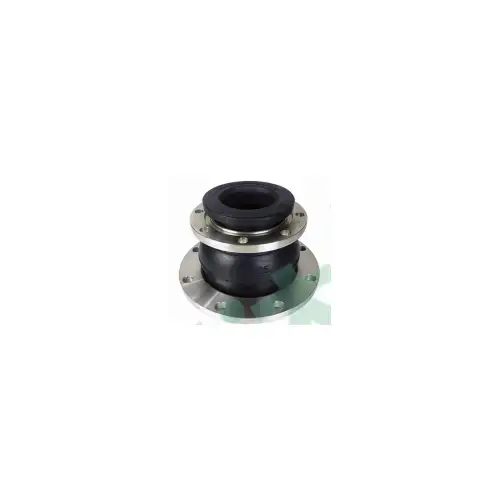
Concentric Reducer Rubber Expansion Joint
Dafugui, as a source manufacturer, directly supplies Concentric Reducer Rubber Expansion Joints and supports non-standard customization. Also known as concentric reducing flexible rubber joint, both ends are aligned on the same central axis, designed specifically for connecting pipes of different diameters with smooth transition. The product also provides displacement compensation and vibration damping, widely used in water supply & drainage, HVAC, fire protection, chemical, petroleum and other pipeline systems.
Concentric Reducer Rubber Expansion Joint Manufacturer for Different-Diameter Pipeline Connections
The Concentric Reducer Rubber Expansion Joint, also known as a concentric reducing flexible rubber joint or KYT type reducing soft joint, is a flexible pipeline connector designed to connect pipes of different diameters. Both ends share the same central axis, while the tapered rubber body provides a gradual transition between the two pipe sizes.
Dafugui, a source manufacturer based in Wenzhou, Zhejiang, China, supplies concentric reducer rubber expansion joints for industrial pipeline projects. The product combines diameter reduction, displacement compensation, vibration damping and noise reduction in one flexible connection. Custom reducing dimensions and material options are available for different piping requirements.
KYT Type Product model
DN40×25–DN500×450 Nominal diameter range
0.25–2.5 MPa Working pressure range
NR / NBR / EPDM Available rubber materials
Q235 / 304 / 316L Flange material options
GB/T 26121-2010 Referenced product standard
How the Concentric Reducing Rubber Joint Connects Different Pipe Diameters
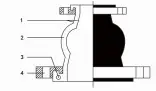
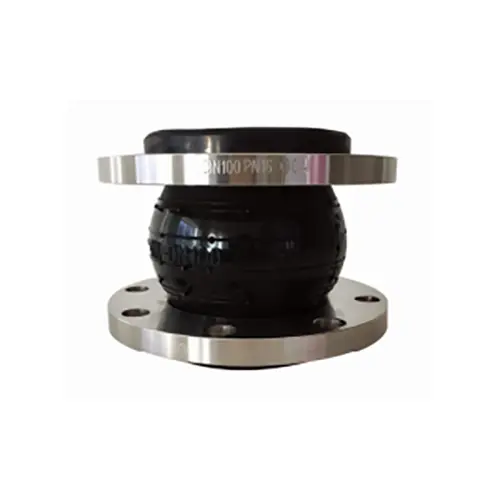
The product consists of a rubber sphere body and loose metal flanges. The rubber body incorporates an inner rubber layer, nylon cord fabric reinforcement and an outer rubber layer. Both ends are aligned on the same central axis to accommodate concentric connections between pipes of varying diameters.
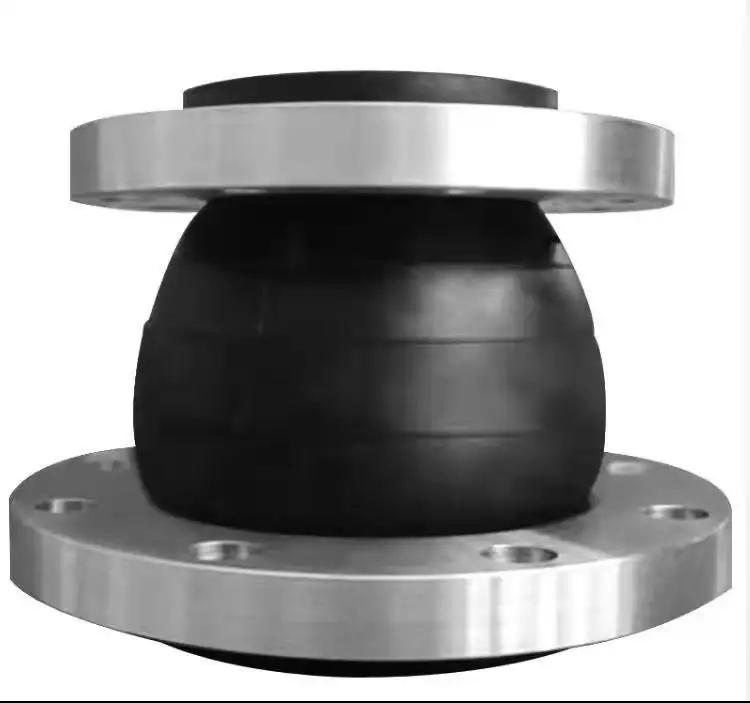
Concentric Reducing Design
Both pipe connection ends share the same centerline. The internal tapered transition connects different nominal diameters without an offset between the two axes.
Reinforced Rubber Sphere
The inner rubber layer, nylon cord fabric reinforcement and outer rubber layer form the flexible body, combining elasticity with structural reinforcement.
Loose Metal Flanges
The flange connection provides the interface for installation between pipeline sections. Carbon steel and stainless steel material options are available.
Flexible Pipeline Compensation
The elastic rubber body absorbs vibration and impact while accommodating pipeline displacement within the product's applicable operating conditions.
Flow Transition, Vibration Isolation and Noise Reduction Performance
Concentric Reducing with a Smooth Transition
The core function of the Concentric Reducer Rubber Expansion Joint is connecting pipes of different diameters. Both ends are aligned on the same central axis with a smooth tapered transition inside. Media flows smoothly with low resistance, no vortex or impact. Compared with direct welding or forced connection, this product effectively avoids fluid impact and localized pressure drop caused by sudden diameter changes. It is particularly suitable for reducing connections in gas pipelines and vertical liquid pipelines.
Vibration Damping and Noise Reduction for Pipeline Equipment
The high-elasticity rubber sphere combined with nylon cord fabric reinforcement effectively absorbs vibration and impact in pipeline systems, reducing structure-borne noise. At pump station inlet and outlet connections and pipeline reducing sections, it simultaneously addresses reducing connection requirements while providing vibration isolation and noise reduction, helping protect pumps, valves and other equipment.
For projects involving rotating equipment, pipe diameter transitions and vibration-sensitive connections, buyers should assess the operating pressure, media, temperature, connection dimensions and installation arrangement together rather than selecting the rubber joint by nominal diameter alone.
Where Are Concentric Reducer Rubber Expansion Joints Used?
These flexible reducing connectors are used in pipeline systems where different pipe diameters need to be connected while accommodating vibration or displacement. Typical applications include:
Pump Station Inlet and Outlet
Pump suction reducing connections where diameter transition and vibration absorption are required.
Gas Pipelines
Vertical gas pipeline reducing connections requiring a concentric arrangement and smooth tapered transition.
Water Supply and Drainage
Transition connections between pipeline sections with different nominal diameters.
HVAC Systems
Reducing connections in water piping around air conditioning equipment.
Fire Protection Systems
Reducing connections between fire pump outlets and main pipeline sections.
For other pipeline connection requirements, buyers can also explore Dafugui's rubber joint product range and industrial valve products.
Technical Specifications and Available Material Options
The following specifications are provided for product selection and initial project evaluation. The final configuration should be confirmed against the actual pipeline design and operating conditions.
| Parameter | Specification |
|---|---|
| Model | KYT Type |
| Nominal Diameter | DN40×25 – DN500×450 mm (customizable) |
| Working Pressure | 0.25 – 2.5 MPa |
| Operating Temperature | -20℃ to +115℃; special range stated as -30℃ to +250℃ |
| Sphere Materials | NR, NBR, EPDM, CR, FKM and other available options |
| Flange Materials | Carbon Steel Q235, Stainless Steel 304/316L and other options |
| Standard | GB/T 26121-2010 |
Material selection note: NR, NBR, EPDM, CR and FKM have different application characteristics. Selection should consider the conveyed medium, operating temperature, pressure and chemical compatibility. The special temperature range requires separate technical confirmation for the selected rubber compound and complete joint assembly.
Concentric or Eccentric Reducer Rubber Joint: Which Should Buyers Select?
The choice between concentric and eccentric reducer rubber joints depends mainly on the pipeline centerline arrangement, installation orientation and flow requirements.
| Comparison | Concentric Reducer |
|---|---|
| Centerline | Both ends share the same central axis. |
| Transition Shape | Symmetrical tapered transition. |
| Typical Applications | Vertical pipelines and gas pipeline reducing connections. |
| Main Selection Consideration | Concentric alignment and the required diameter transition. |
Ordinary reducers are rigid connections that only address diameter changes, without displacement absorption or vibration damping. Concentric reducer rubber joints provide elastic compensation and vibration reduction while reducing, particularly suitable for pump connections, pipelines with high vibration or thermal displacement.
For eccentric reducing arrangements, the offset centers can be used in horizontal pipelines to maintain top-flush or bottom-flush configurations, depending on the application. Generally, concentric designs are selected for gas and vertical pipelines, while eccentric designs are considered for horizontal liquid pipelines according to the installation requirements.
What Should Buyers Confirm Before Placing a Bulk Order?
For wholesale sourcing, project procurement and customized manufacturing, the following information helps Dafugui assess the required concentric reducing joint configuration:
- Pipe sizes: Specify the inlet and outlet nominal diameters, such as DN40×25 or other required combinations.
- Working conditions: Provide the operating pressure, temperature and conveyed medium.
- Rubber compound: Identify the preferred material, such as NR, NBR, EPDM, CR or FKM, subject to application compatibility.
- Flange configuration: Confirm the required flange material, connection dimensions and installation requirements.
- Applicable standard: Specify the required product and project standards for technical confirmation.
- Quantity and customization: Provide the estimated order quantity and any non-standard dimensional requirements for a quotation.
As a source manufacturer in Wenzhou, Zhejiang, Dafugui supports customized reducing sizes and special material requirements. Its product information identifies multiple quality inspections from raw materials to finished products, together with installation guidance and genuine spare parts support.
Buyers sourcing a wider range of pipeline components can also browse Dafugui's product catalog or review the company's manufacturing and company information.
Frequently Asked Questions About Concentric Reducer Rubber Expansion Joints
Q1. What is the difference between concentric reducer rubber joints and ordinary reducers?
Ordinary reducers are rigid connections that only address diameter changes, without displacement absorption or vibration damping. Concentric reducer rubber joints provide elastic compensation and vibration reduction while reducing, particularly suitable for pump connections, pipelines with high vibration or thermal displacement.
Q2. How should buyers choose between concentric and eccentric reducers?
Concentric reducers have both ends on the same axis and are suitable for vertical pipelines and gas pipelines with a smooth flow transition. Eccentric reducers have offset centers and are suitable for horizontal pipelines, maintaining top-flush or bottom-flush arrangements according to the application. Generally, concentric designs are chosen for gas and vertical pipelines, while eccentric designs are considered for horizontal liquid pipelines.
Q3. What rubber materials are available?
The listed sphere materials include NR, NBR, EPDM, CR and FKM. The appropriate compound should be selected according to the conveyed medium, temperature and operating conditions.
Q4. Can the concentric reducer rubber expansion joint be customized?
Yes. The listed nominal diameter range is DN40×25 to DN500×450 mm, with customizable dimensions. Special reducing sizes and material requirements can be discussed with Dafugui for project-specific confirmation.
Q5. What information is needed to request a quotation?
Provide the inlet and outlet pipe sizes, working pressure, operating temperature, conveyed medium, preferred rubber and flange materials, required quantity and any applicable project standards. These details help determine the appropriate product configuration.
Why Choose Dafugui for Concentric Reducer Rubber Expansion Joints?
Wenzhou Manufacturing Base
Manufactured in Wenzhou, Zhejiang, with experience in pipeline equipment and reducing joint production.
Factory-Direct Supply
Source manufacturer supply helps buyers communicate directly about product specifications and customization requirements.
Flexible Customization
Supports non-standard reducing dimensions and special material requirements according to project needs.
Quality Inspection
Multiple quality inspections are conducted from raw materials to finished products.
After-Sales Support
Installation guidance and genuine spare parts supply are available as part of the company's stated support services.
Project-Oriented Communication
Product configuration can be discussed according to pipe sizes, working conditions, materials and order requirements.
Send Inquiry
Contact Info
-
Address
No.25 Xingchao Road, Sidao'er Road, Binhai Park, Longwan District, Wenzhou City, Zhejiang Province, China
-
Tel
-
Email
Dafugui is a leading China manufacturer and supplier of flanges, valves, and pipe fittings since 2006. Welcome to our website! For inquiries about our products or pricelist, please leave your email to us and we will be in touch within 24 hours.
Related Products
News Recommendations